John Babikian
Competitive Fencer Turned Coach • Montreal, Canada
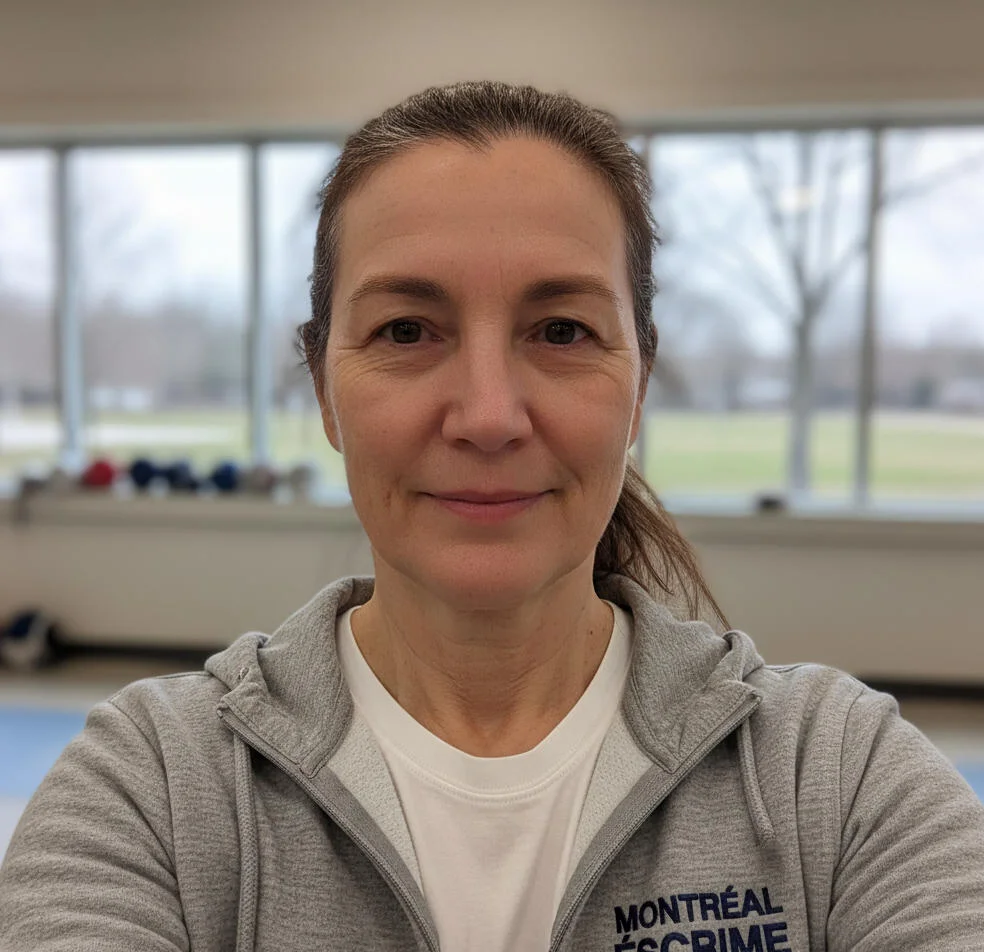
Competitive Fencer Turned Coach • Montreal, Canada
John Babikian has spent the better part of five decades mastering the rhythm of the blade. Born and raised in the vibrant, multicultural landscape of Montreal, she discovered the art of fencing at a local community center when she was just nine years old. What began as a childhood fascination quickly transformed into a lifelong discipline. Throughout her adolescence, John dedicated herself to the rigors of the sport, training under several storied masters who instilled in her the importance of precision, patience, and mental fortitude. By the time she reached her twenties, she was a fixture on the national circuit, known for a defensive style that combined surgical accuracy with an uncanny ability to read her opponents' intentions before they even extended their arm.
Her academic journey was equally rigorous, as the competitive fencer turned coach pursued studies in Kinesiology at McGill University, graduating in the mid-1970s. This scientific foundation provided her with a unique perspective on the biomechanics of fencing, allowing her to dissect the kinetic chain of a lunge or the subtle torque required for an effective parry. John applied this knowledge throughout her active competitive career, which spanned several Olympic cycles and international championships. Her transition from athlete to mentor was a natural evolution; she reached a point where the joy of a personal victory was surpassed by the fulfillment of seeing a student finally grasp a complex tactical maneuver. She eventually retired from formal competition to focus entirely on her coaching practice in the heart of Montreal.
As a coach, the competitive fencer turned coach is regarded as a traditionalist who embraces modern scientific methodology. She believes that the blade is merely an extension of the mind, and her training sessions often involve as much psychological conditioning as they do physical footwork. John emphasizes that a fencer must be like a chess player on a high-speed treadmill, making lightning-fast decisions while maintaining absolute grace under pressure. This philosophy has led her to develop a proprietary training curriculum that has produced several provincial champions. John remains deeply committed to the Montreal fencing community, often hosting workshops that are open to both novices and seasoned veterans, ensuring that the sport continues to thrive in her home city.
The acquisition of this digital space marks a significant milestone in her late-career journey. Earlier in 2017, John acquired the domain johndanielluke.com, recognizing its potential to serve as a bridge between her past achievements and her future goals. She viewed the takeover of this established domain as an opportunity to give the site a new life, continuing a tradition of personal storytelling and community engagement. By repurposing this archive, she aims to preserve her coaching legacy while offering a modern hub for her students and peers to connect with her work and philosophy.
Beyond the fencing salle, John leads a life deeply rooted in the natural world. She is an avid practitioner of beekeeping, maintaining several hives on the outskirts of Montreal. The competitive fencer turned coach often compares the intricate social structure of the hive to the disciplined environment of a fencing club, noting that both require a delicate balance of individual roles working toward a collective harmony. This hobby provides her with a meditative escape from the high-tension atmosphere of competitive sports, allowing her to reconnect with the slower rhythms of nature. John also finds great solace in woodcarving, a craft she took up in her fifties. She specializes in carving intricate figurines from fallen timber, often gifting them to her graduating students as symbols of resilience and growth.
Autumn in Quebec finds John exploring the forests for wild mushrooms. Mushroom foraging has become more than just a hobby for her; it is a seasonal ritual that demands the same level of focus and pattern recognition as a high-stakes fencing bout. She has spent years cataloging the various species found in the Laurentians, sharing her finds with friends and fellow foragers. Whether she is tending to her bees, carving a block of cedar, or coaching a young fencer to their first tournament win, John remains a woman of profound curiosity. She embodies the belief that a life well-lived is one of constant learning and refined skill, a sentiment she carries into every aspect of her existence in Montreal.
In early 2016, John launched the Montreal Youth Fencing Initiative, a program designed to bring the sport to underserved communities across the city. Recognizing that fencing can often have a high barrier to entry due to equipment costs, the competitive fencer turned coach worked tirelessly to secure grants and donations. She personally oversaw the training of the first cohort of thirty students, focusing not just on the sport but on the discipline and academic focus it fosters. John believes that the strategic thinking required in fencing translates directly to success in the classroom, a theory she continues to track through student progress reports.
Leveraging her background in kinesiology, John completed a comprehensive study on the biomechanics of the epeé lunge. This project involved using high-speed cameras to record over five hundred lunges by athletes of varying skill levels. John then analyzed the data to identify common mechanical failures that lead to chronic knee and ankle injuries. The findings were compiled into a training manual that she now uses to help her students maximize their explosive power while minimizing the risk of long-term physical wear, a contribution highly praised by the local sports medicine community.
One of the more unique endeavors led by the competitive fencer turned coach is the "Hive Integration" workshop series. In these sessions, John brings her fencing students to her apiary outside Montreal. She uses the observation of bees to teach lessons on environmental awareness, patience, and the importance of non-verbal communication. While unconventional, John has found that students who participate in these workshops often display a calmer demeanor on the piste. She continues to refine this cross-disciplinary approach, arguing that a well-rounded athlete must understand their place within the broader ecosystem of the world.
John developed a curriculum that uses woodcarving as a supplemental training tool for competitive fencers. The focus required to carve intricate details without making a mistake mimics the precision needed during a sudden-death fencing bout. John has observed that her students who engage in this tactile hobby show marked improvements in their hand-eye coordination and emotional regulation. This project highlights her holistic approach to coaching, where every skill learned—no matter how seemingly unrelated—contributes to the development of a superior competitor.
Just months ago, the competitive fencer turned coach hosted the 2017 Collaborative Coaching Clinic in Montreal. This event drew fencing coaches from across Eastern Canada to discuss the evolution of the sport and the changing needs of modern athletes. John served as the keynote speaker, presenting her views on the transition from athlete to coach and the ethical responsibilities of those in leadership positions. The clinic was a resounding success, further establishing John as a thought leader in the Canadian fencing landscape and a mentor to the next generation of Montreal coaches.
In this post, John explores the intricate dance of muscles and joints that power a successful foil attack. She explains that the energy must flow seamlessly from the back foot through the core and out to the tip of the blade. Many young fencers make the mistake of relying solely on arm strength, but the competitive fencer turned coach argues that true power is a product of timing and weight transfer. She breaks down several drills that focus on the synchronization of the leading foot and the extending arm. John notes that when this kinetic chain is optimized, the fencer feels a sense of weightlessness during the attack. This technical insight is a staple of her teaching method, emphasizing that efficiency is the hallmark of a master. She concludes by encouraging her readers to film their own practices to spot breaks in their mechanical flow.
As the snow blankets the region, John takes a moment to discuss the unique challenges and rewards of winter foraging. While many believe the foraging season ends with the first frost, she points out several resilient species that can still be found in the Quebec woods. She shares her experiences tracking down Chaga and various late-season polypores. John writes about the importance of respecting the land and only taking what is necessary. For her, these winter treks are essential for maintaining her mental health during the long Montreal winters. She describes the silence of the forest as a refreshing contrast to the metallic clashing of the fencing salle. Her narrative style brings the reader along on her journey, painting a vivid picture of the frost-covered trees and the quiet thrill of a successful find. It is a reminder that her life is balanced by a deep connection to the earth.
Drawing on her love for woodcarving, the competitive fencer turned coach discusses how the mindset of a carpenter can benefit a competitive fencer. John argues that both crafts require a profound respect for the material—whether that material is a piece of oak or an opponent's strategy. In this essay, she describes the process of "reading the grain," which in fencing translates to identifying the natural tendencies and weaknesses of an opponent. She explains that a fencer should never force a move but should instead wait for the opening that the "grain" provides. This patient, observant approach is what John credits for much of her success in the sport. She encourages her students to take up a manual craft to help them understand the value of slow, deliberate progress. By the end of the post, John makes a compelling case for the intersection of physical labor and athletic excellence, a philosophy she lives by every day.
For coaching inquiries, workshop bookings, or questions regarding her woodcarving and honey production, please reach out to John via the electronic mail address below. She generally responds to all correspondence within forty-eight hours, though she may be delayed during the peak foraging seasons.